
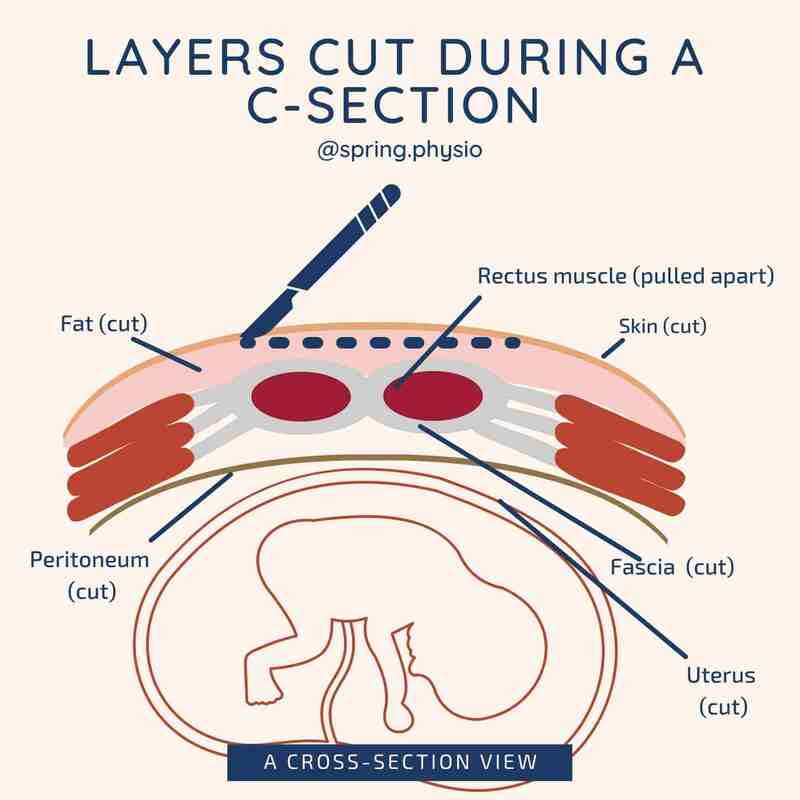
When you consider the number of structures that are cut during a c-section, it's not that surprising that women can find they have some trouble regaining abdominal & core strength afterwards. Whilst they don't normally cut through the abdominal muscles, the connective tissue around the muscles is cut and so as those structures heal it can cause adhesions. This can affect how well the muscles can glide and contract through the surrounding tissue.
If you are struggling with your abdominal strength post c-section, ask your GP for a physio referral, or alternatively book in to see your local pelvic health physio.
2 Comments
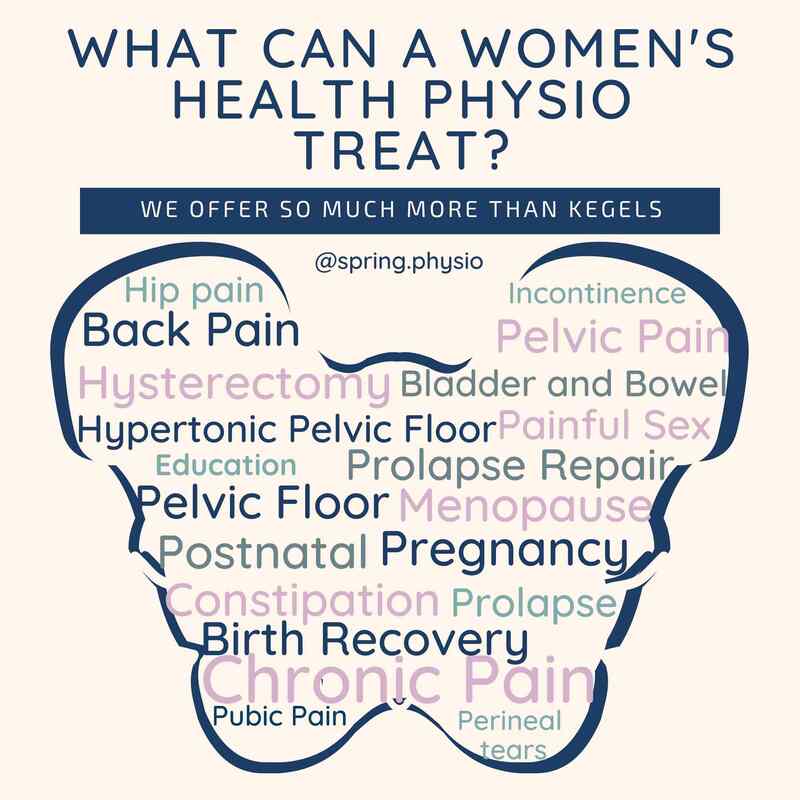 Patients often tell me that they didn't hadn't even know that a women's health specialty existed until they heard it on the grapevine! Women's health physios have had additional post graduate training. Many have worked in musculoskeletal before specialising in women's health so can take a holistic approach to your symptoms. We do so much more than just treat incontinence. We treat pelvic pain, back pain, hip pain, prolapse, diastasis, menopause related symptoms, constipation, urgency to name but a few!!!Patients often tell me that they didn't hadn't even know that a women's health specialty existed until they heard it on the grapevine! Women's health physios have had additional post graduate training. Many have worked in musculoskeletal before specialising in women's health so can take a holistic approach to your symptoms. We do so much more than just treat incontinence. We treat pelvic pain, back pain, hip pain, prolapse, diastasis, menopause related symptoms, constipation, urgency to name but a few!!!  Personalised pelvic art available in our shopClick here to go to Pelvic Floor Poster Shop
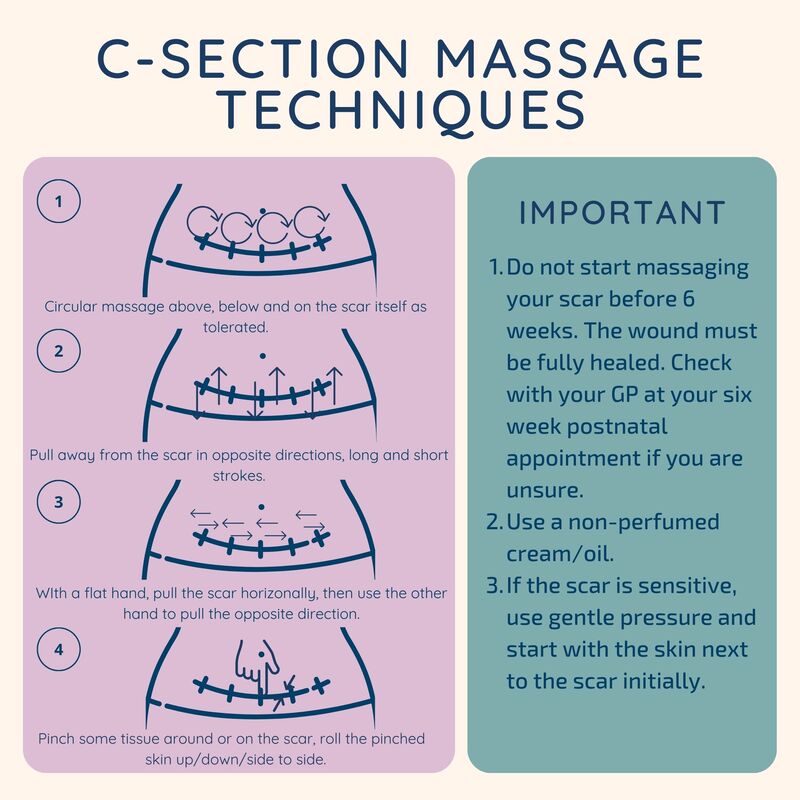 We often assume if something hurts we should leave it alone. But that is not always the case, especially when it comes to scars.
Scars are often sensitive because the new regenerated nerves need a bit of re-education. Nerve endings are there to protect us and they do that by sending signals to the brain which then produce pain. Nerves in a scar can sometimes be a bit too enthusiastic and send too many pain signals to the brain. Pressure from clothing, rough fabrics or touch can all be interpreted as a potential threat and the nerves respond with pain. Of course, these types of touch are not dangerous and so we need to educate the nerves to not respond to such things. We can do this through massage and touch. The more we do this the more the nerves learn that these types of touch are normal. 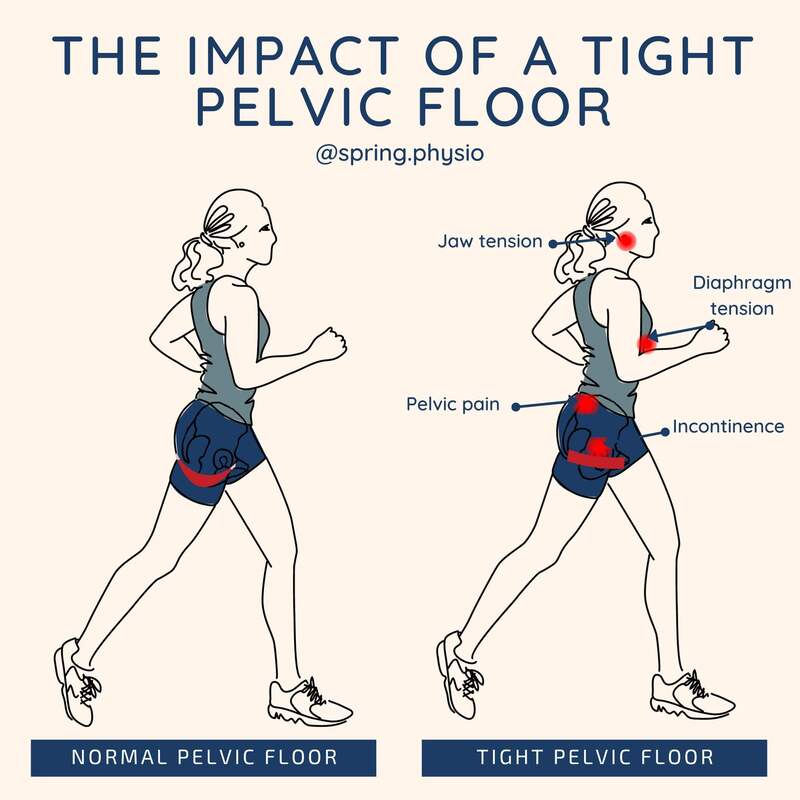
The impact of a tight or hypertonic pelvic floor isn't limited to the pelvis area.
Whist a tight pelvic floor can cause symptoms such as incontinence, painful sex and pelvic pain, the effects can be more far reaching. The pelvic floor is the floor of your core; tightness here will impact other elements of the core system, such as the diaphragm. If the diaphragm becomes tense, this will impact on how optimally the chest expands and contracts with breathing. Our bodies are linked via a support system called fascia. This is connective tissue that runs throughout the body. Because fascia links diffrent areas of the body together, tension in one place can lead to tension in another. For this reason it is not uncommon to experience jaw tension alongside a tight pelvic floor. 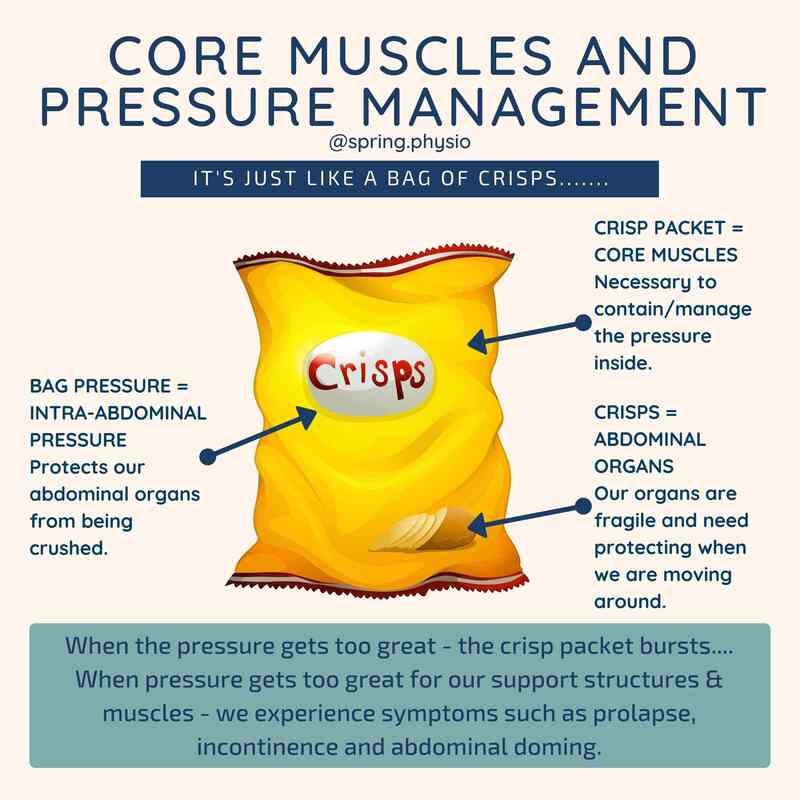 Pressure is our nemesis when it comes to pelvic floor issues such as prolapse and incontinence. The more pressure that is present, the harder our body has to work eg. during weightlifting. Breathing is an easy way to reduce pressure. If we exhale rather than hold our breath on exertion, there is less pressure being held "in the crisp packet" that has to be managed by the core muscles. If you have symptoms on a particular activity - such as running/HIIT or cross fit, see your local women's health physio. They will be able to modify your activity to better manage the pressure you are producing with that activity.I use this analogy all the time in clinic to help patients understand the importance of managing their pressure to help improve core/pelvic floor symptoms. 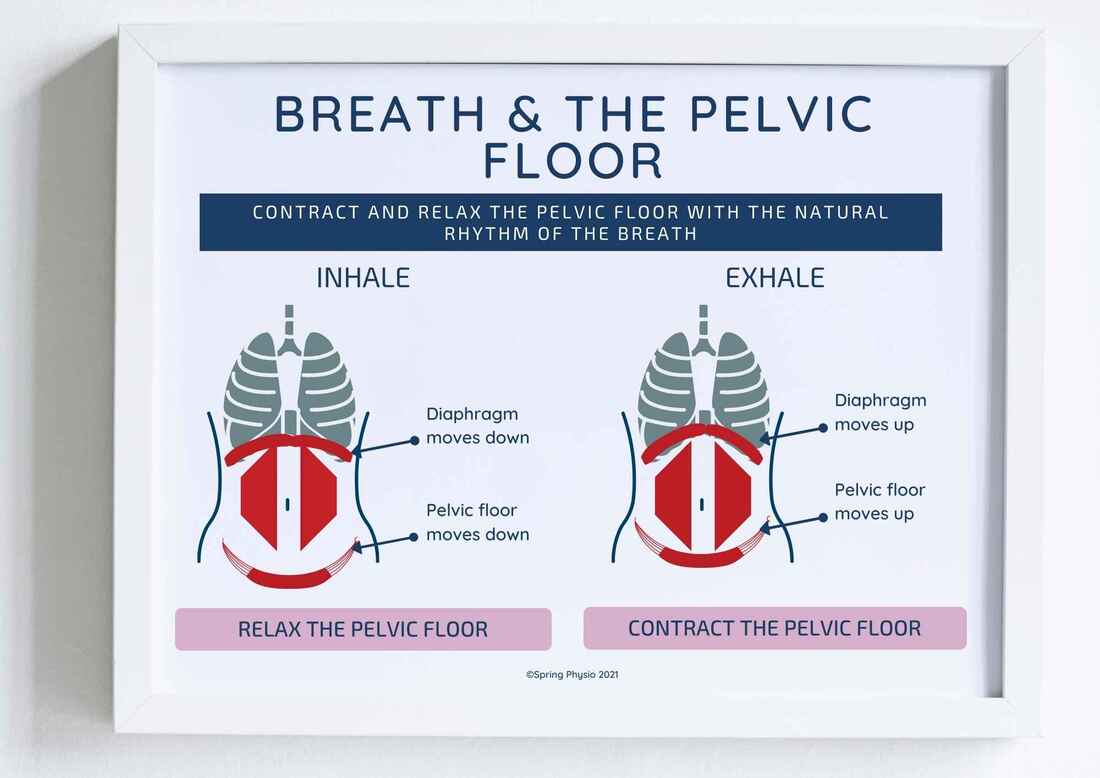 Breath and Pelvic Floor PosterThe pelvic floor is not just one muscle, but many. To ensure you engage all of the muscles during a contraction you need to: Ensure you're closing from back to front. Either visualise closing your back and front passage, or that your coccyx (sitting bone) and pubic bone are coming together. Once you've got the close - draw the contraction up. You may find it helpful to imagine you are lifting up a marble with your vagina!! The lift can be tricky if the pelvic floor is very weak but keep trying and it will get easier. 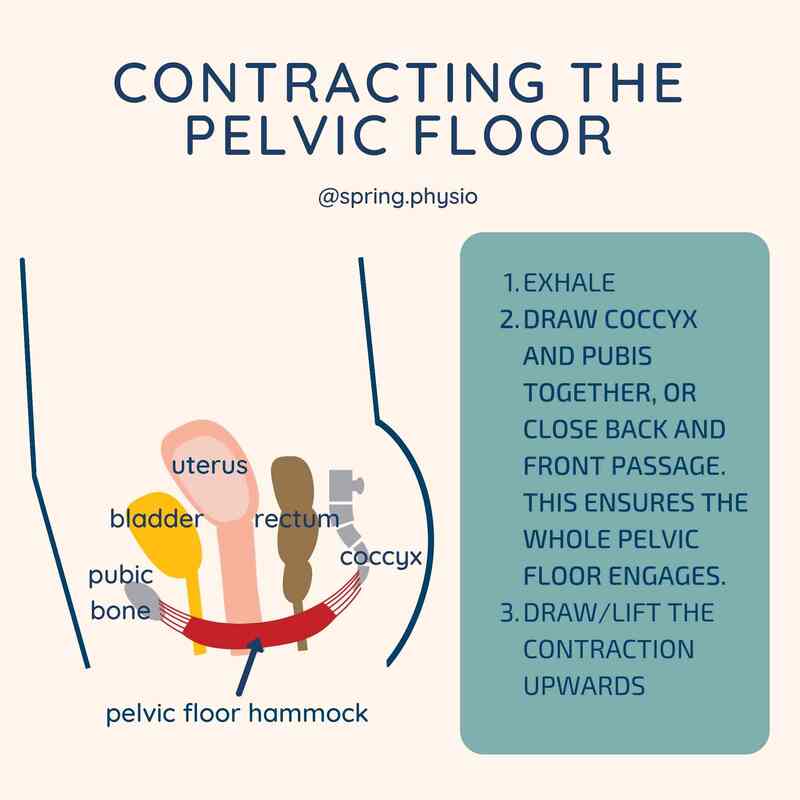 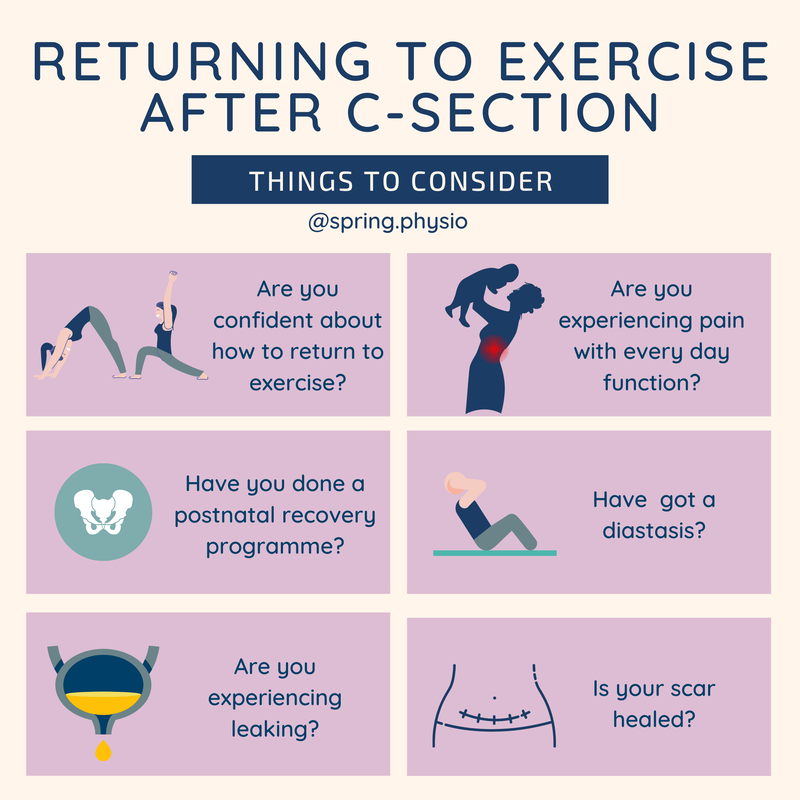 It can be daunting returning to exercise after pregnancy and c-section. Your body may feel very different from when you exercised pre pregnancy; you may be nervous about returning to your old exercise routine - whether it's HIIT, running, swimming or something else entirely. You may have no particular issues or symptoms after your c-section, but it's still a great idea to do a postnatal exercise programme after birth. Post natal programmes are gentle on the pelvic floor and focus on strengthening the core muscles in preparation for more intense exercise. If you have new pain issues post c-section, problems with your scar, incontinence, diastasis, or you just lack confidence in knowing whether your body is ready for your usual exercise choice, then I'd strongly recommend a check up with a women's health physio. If you are struggling to find one locally, please get in touch and I will try and help you find one. 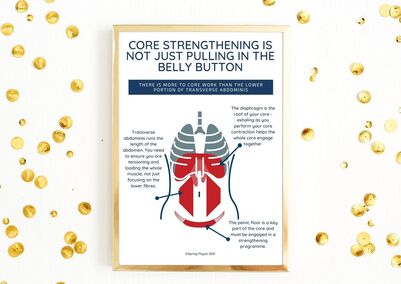 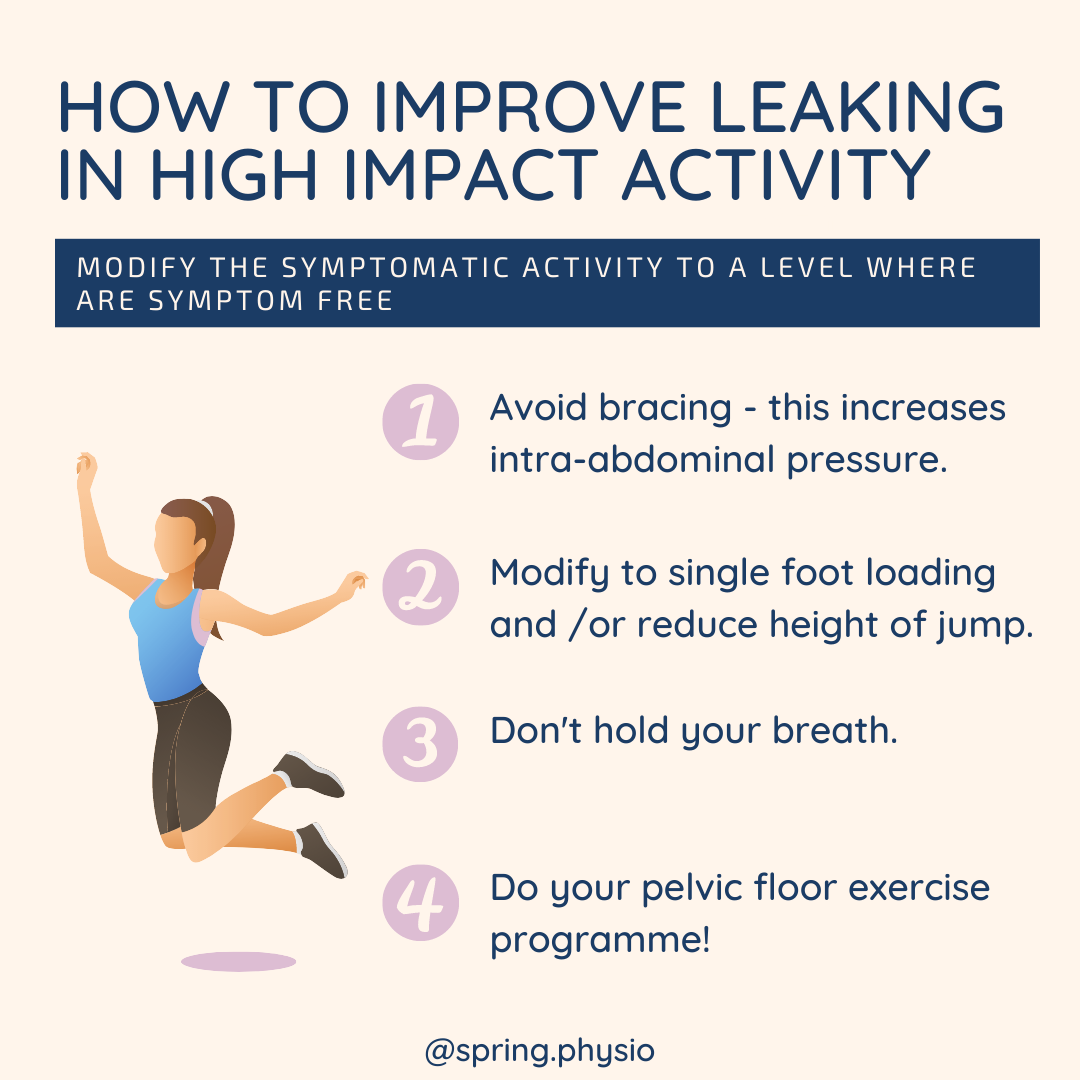 It can be tempting to avoid exercises that cause you to leak. Physios aim to modify, rather than stopping you doing an activity altogether. This is because if you can find a level where you can perform the activity symptom free, it will actually aid your rehabilitation and help you to return back to doing it in it's entirety, quicker. These are some modification ideas. ✅1. Avoid bracing - bracing your abdominals actually increases the pressure that the core has to manage. Try and stay relaxed, trusting your core to do what it needs to. ✅2. Two foot jumping creates the largest ground reaction forces. If you can, modify to hopping from one foot to the other instead. ✅3. Reducing the height of the impact decreases the ground reaction forces , so making your jump smaller may help to reduce leaking. ✅4. Keep breathing - this helps pressure to escape up through your mouth and not force the pelvic floor to have to manage the pressure created from the breath hold. ✅5. Ask your physio for specific loading exercises for the sport or activity you're struggling with. Impact training forms part of your rehab, it's not just about kegels!It can be tempting to avoid exercises that cause you to leak. Physios aim to modify, rather than stopping you doing an activity altogether. This is because if you can find a level where you can perform the activity symptom free, it will actually aid your rehabilitation and help you to return back to doing it in it's entirety, quicker. 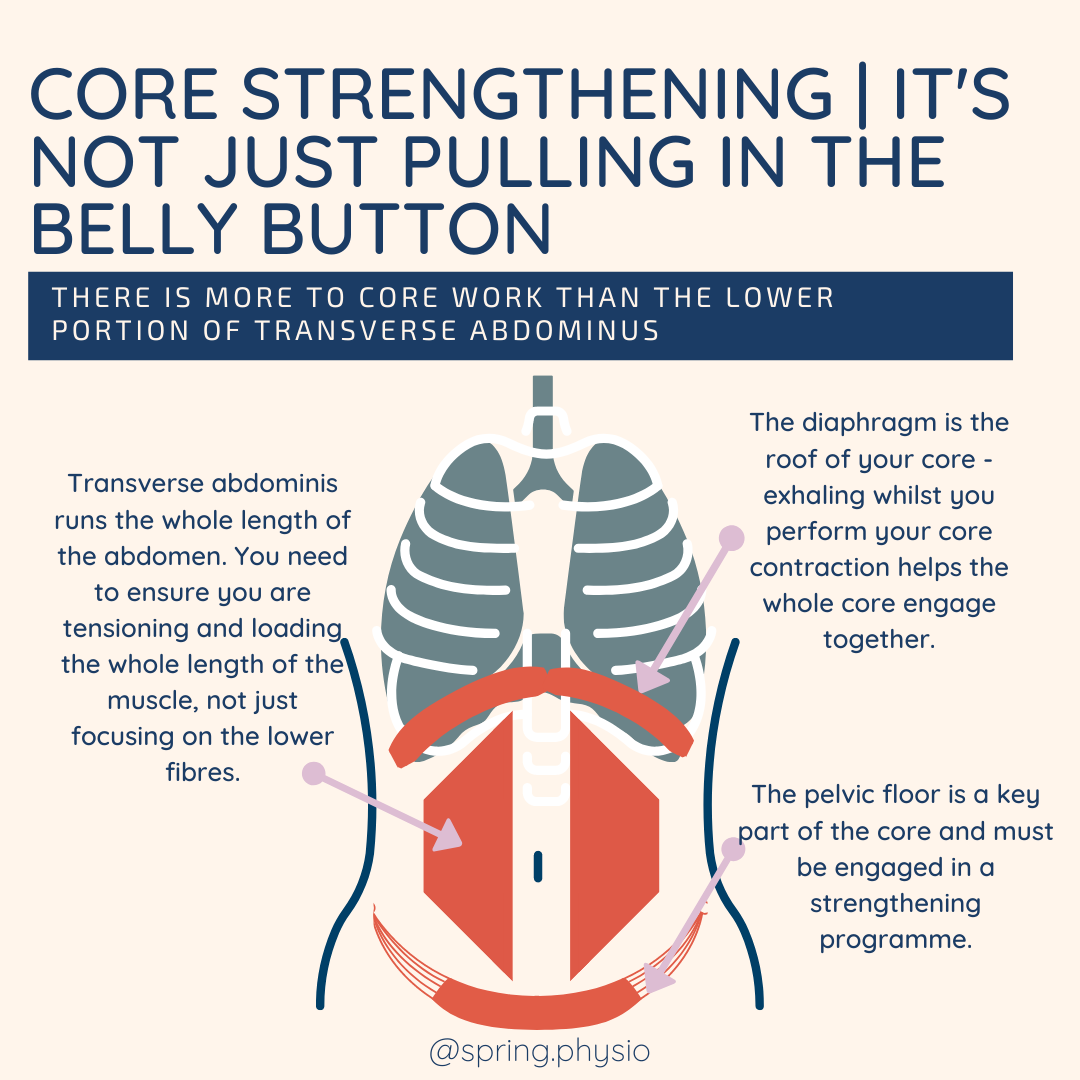 Cueing is so important. It can be the difference between great engagement and recovery of core related issues and just engaging other local, overworking muscles.
I have lost count of the number of exercise classes where I've vaguely been told "Pull your belly button to spine". When? All the time? When I'm inhaling? When I'm exhaling? Fortunately as a physio I know what I should do, but many other people in the class must be totally confused! Key aspects for core rehab are: Use your exhale to engage the diaphragm and reduce intra-abdominal pressure. Make sure a pelvic floor contraction is included. Make it bespoke! People do not respond the same way to an exercise. Check their engagement - how well are they achieving tension? Is tension generated along the whole of the TVA, or is one area better than another? Can you change the cue to improve the engagement? I'm constantly playing around with visualisation and cueing to see what works best. We're not robots, everyone is different, but that's what keeps the job interesting! 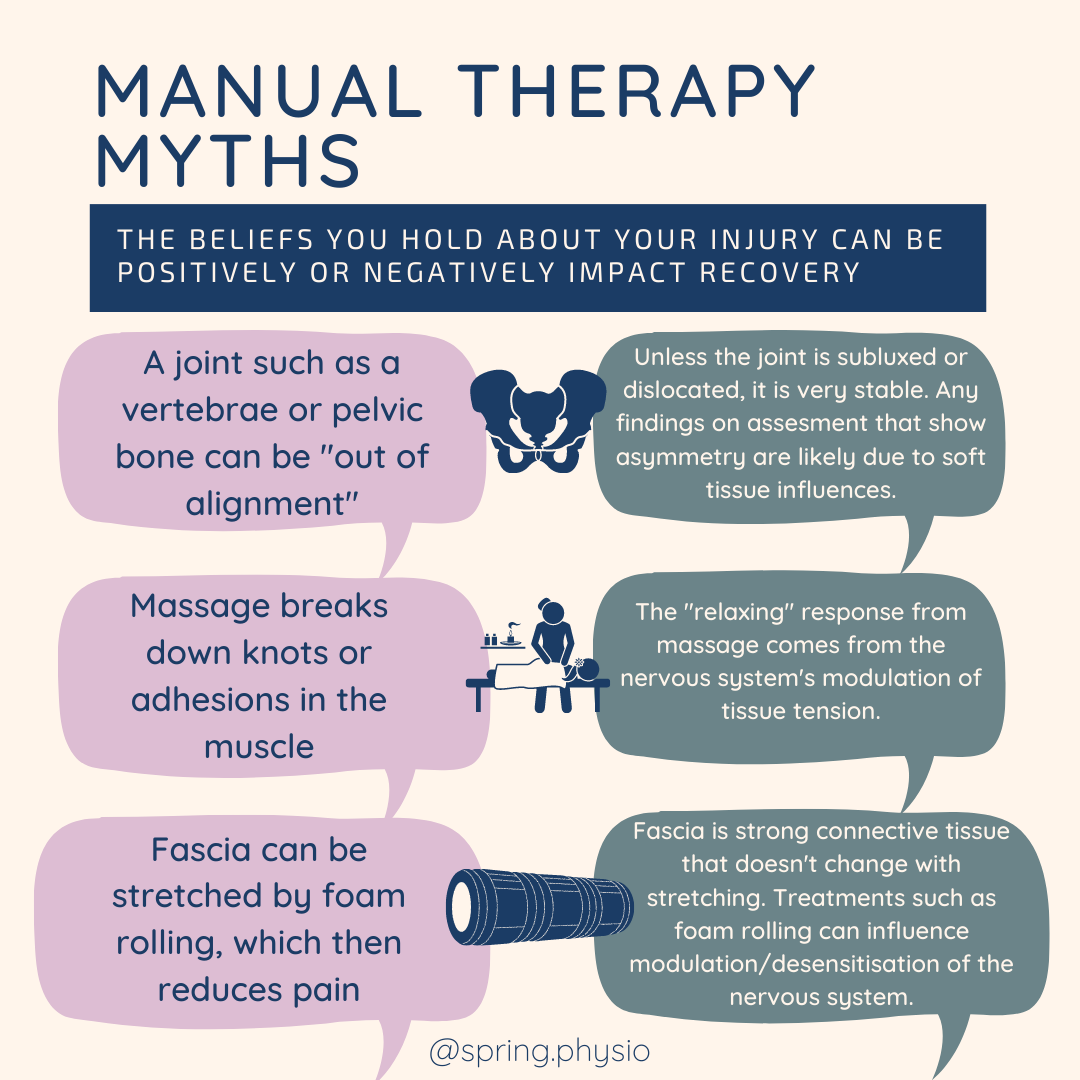 You might read this post and think - why does it matter? As long as a treatment makes you feel better, it's not important how it works, right?
Well that depends. Let's say you have pelvic pain and have been told that one of your pelvic joints is out of alignment. That belief means that every time you have a relapse, you believe you must see a therapist to have it "put back in", otherwise it won't get better. You might be scared to do gentle exercises or your every day tasks, in case you make it come out further! It may make you scared to move, fearing that you have an unstable pelvis, imagining something similar to a fracture. This fear and belief does NOT help your recovery. Your brain will be on red alert protection mode, provoking pain responses to guard against anything that might worsen the instability. You see your therapist, they "put it back in" and you feel better. Until next time. Because if in the back of your mind you still have this deep seated fear that there is something fundamentally wrong with your skeletal system, any twinge is likely to set your brain off to guard that part of your body. Guarding = pain. So yes, how you understand your diagnosis, and the impact of your treatment really DOES matter. Injuries should not require ongoing maintenance treatments. The goal of physiotherapy is to get you better and help you feel confident in every day life. SHOULD you have a relapse, we will give you the tools and education to ensure you are confident to self treat and manage the flare up. |
AuthorClaire is a women's health and sports Physiotherapist. She is the owner of Spring Physio and is based in East Sussex. Archives
April 2024
Categories
All
|
 RSS Feed